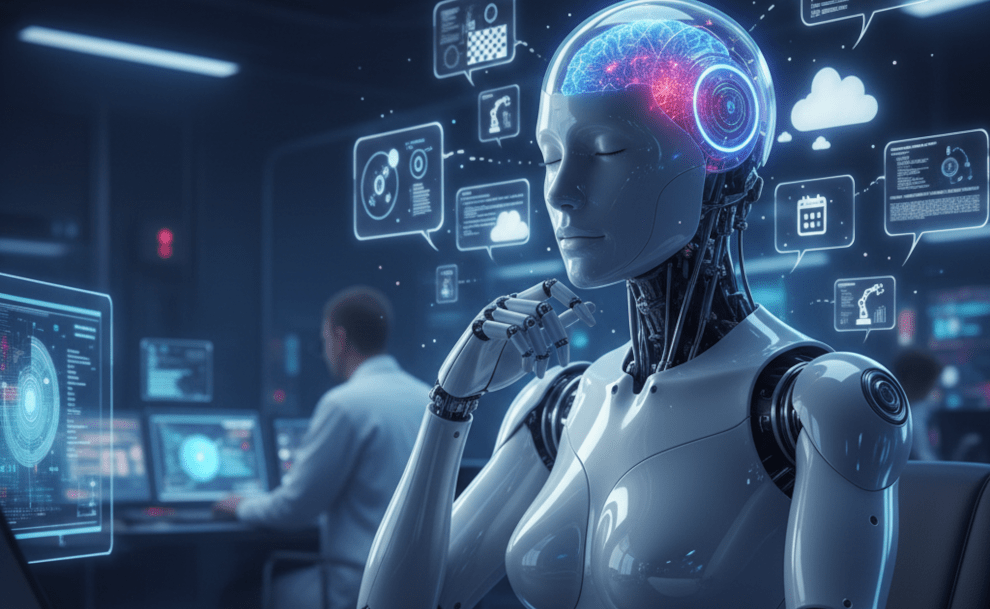
Traditional AI struggles with multitasking and solving unfamiliar problems without massive amounts of data. Researchers at OIST solved this by teaching AI to "talk to itself" using inner speech paired with working memory. This allows the system to hold information temporarily and process ideas internally, much like humans do. The benefit is a smarter, more flexible AI that learns efficiently from sparse data, leading to better household robots and deeper insights into human biology.